
When you explain Pencak Silat to someone outside Southeast Asia, they may think that this strange, little-known martial art from the deepest jungles of Indonesia is not for them. Nothing could be further from the truth. Pencak Silat is for everyone, whether children, teenagers, adults, men or women, regardless of whether they have ever set foot in a gym. Pencak Silat is designed to accompany people through all stages of their lives.
The harimau (tiger) is the essence of the style we practise (Harimau Minangkabau), and its low, fluid movements may seem complex to those who do not practise them. The learning curve is slow, and the sedentary lifestyle we lead today does not help to shorten it, but consistency and good practice enable us to learn to move like a tiger, with flexibility, attention and firmness when necessary. But the most important thing is not to imitate the animal, but to understand what it represents: adaptability, respect and patience.
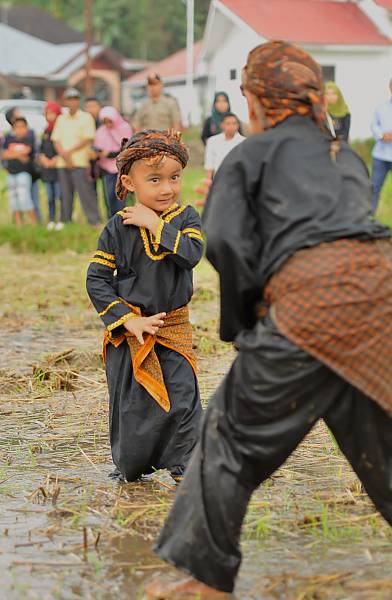
In a class, you can see the youngest pesilat (Pencak Silat practitioner) moving around the floor like a curious tiger, while an older person works slowly, strengthening their balance and mobility. Both are practising the same Silat, but each adapting it to their body and stage of life.
Silat not only teaches self-defence and physical fitness, it also works on the mind and personality.
For a child, training in Silat is like becoming a restless tiger. Crawling, jumping and turning exercises develop motor coordination, flexibility and reflexes. A shy girl begins to gain confidence when she discovers that she can move quickly and nimbly. A boy who is often distracted in class learns to concentrate by following the rhythm of the jurus (forms). Without realising it, everyone acquires discipline in a playful environment, where tradition is also passed on through stories and games.
Adolescence is a time of physical and emotional explosion, and here Silat channels energy through intense and technical training. It boosts self-esteem through tangible progress, such as going from being unable to hold a low stance to moving fluidly. It creates a sense of identity and belonging, forming part of an ancient tradition with values of respect and humility.
In adulthood, priorities change; people seek well-being, stress management and personal safety. Silat offers all of this, as each training session is a complete exercise in strength, flexibility, endurance and agility. Defence and counterattack movements are a real tool for personal protection, adaptable to everyday situations. Group work and constant learning help to release tension and maintain mental balance.
In Indonesia, older people continue to practise Silat not because they need to defend themselves, but because each movement is a reminder of their connection to the art, of their identity within the martial art to which they have belonged for so many years and which has given them so much. The gentle movements help to keep joints mobile and prevent stiffness. Balance exercises reduce the risk of falls. Regular practice offers both physical and mental well-being.
Pencak Silat does not discriminate. The same movement can be a game for a child, a physical challenge for a teenager, a means of defence for an adult, and an exercise in active meditation for an elderly person. Whether you practise it with the energy of a child or the calmness of an elderly person, Pencak Silat always offers you something valuable.
Some martial arts require a level of physical fitness or prior discipline that can be intimidating. Silat, on the other hand, adapts to you. If you can sit on the floor, you can already begin to feel its movements. If you can walk, you can already begin to be aware of your own body and learn to flow.
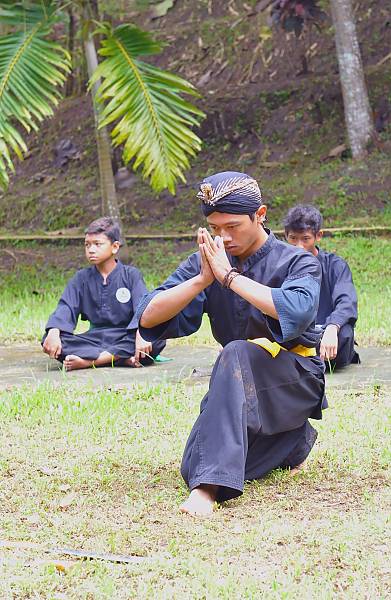
No matter your age, experience or strength, what matters is your willingness to learn and grow. For many, Silat is a passion that stays with us, in one way or another, for life.
– Xabier –