
Few parts of the human body pack so much efficiency into such a small space as the elbow (siku), which we might call the body’s scalpel: short, precise and capable of clearing a path where there seems to be no room.
The elbow manages to squeeze into the tiniest gaps and penetrate angles where a fist would never fit. Like the scalpel, the elbow does not work alone; it clears the way for another technique, be it a movement, a grip, a throw or a strike. In Silat, it is not merely a joint or a simple point of impact; it represents precision over brute force. Often, in my opinion, underrated.
Beyond the strike, which is perhaps the easiest to see and imagine, the elbow is capable of functioning in different situations. Returning to the scalpel analogy, it not only cuts, but also separates and holds. Why use the elbow solely for striking when its possibilities are so much broader? The elbow inflicts injury, but it also creates openings, disrupts rhythms and creates opportunities.
- Dislocations: the elbow presses against joints (shoulder, neck, hip, elbow) to immobilise, project or break.
- Anchor points: fitting the elbow into strategic points (neck, shoulders, arms, legs) to immobilise and move the opponent.
We could say that its effectiveness and versatility lie in several elements:
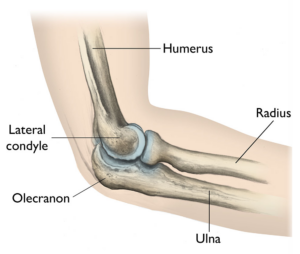
- Bony tip (olecranon): an impact surface, ideal for penetrating soft tissue or striking fragile structures (jaw, floating ribs, etc.). But it is not only the tip that can be used. the edge, or even the inside of the elbow, can also come into play, depending on the situation.
- Controlled flexion and extension: the ability to bend or extend the arm makes the elbow a versatile weapon, switching from a striking tool to a lever in an instant.
- Motor coordination: the connection with the wrist, shoulder, torso and hip makes it a truly valuable tool. Each elbow technique increases in effectiveness if we take into account hip rotation, core engagement and wrist position, which generate power and stability that are transferred to the elbow. Furthermore, the shoulder enables it to work at all angles.
- Micro-spaces: where a fist requires distance, the elbow can be inserted within centimetres. By working at very close range, it utilises minimal movement, making it faster and harder to anticipate than a punch.
Mastery of the elbow cannot be achieved through mechanical repetition alone, a basic understanding of anatomy is essential, as is an understanding of how it relates to the rest of the body in different situations. Furthermore, training must be carried out from all possible positions and heights (atas, tengah, bawah), particularly in styles of Pencak Silat where the ground plays a fundamental role.
However, we must not forget that although the elbow can be truly dangerous, we must always bear in mind its fragility. An elbow can break another elbow, and the latter may never recover. That is why studying and working on it is necessary if we do not want to suffer the consequences ourselves when striking or dislocating.
In Silat, the elbow represents closeness, immediacy and the ability to turn any space, however small, into an advantage. It is not just about physical power, but about adaptation, fluidity and the optimisation of movement.
– Xabier –